
Ocotober 29, 2026 | By Lindsay Foxwell | Community News Service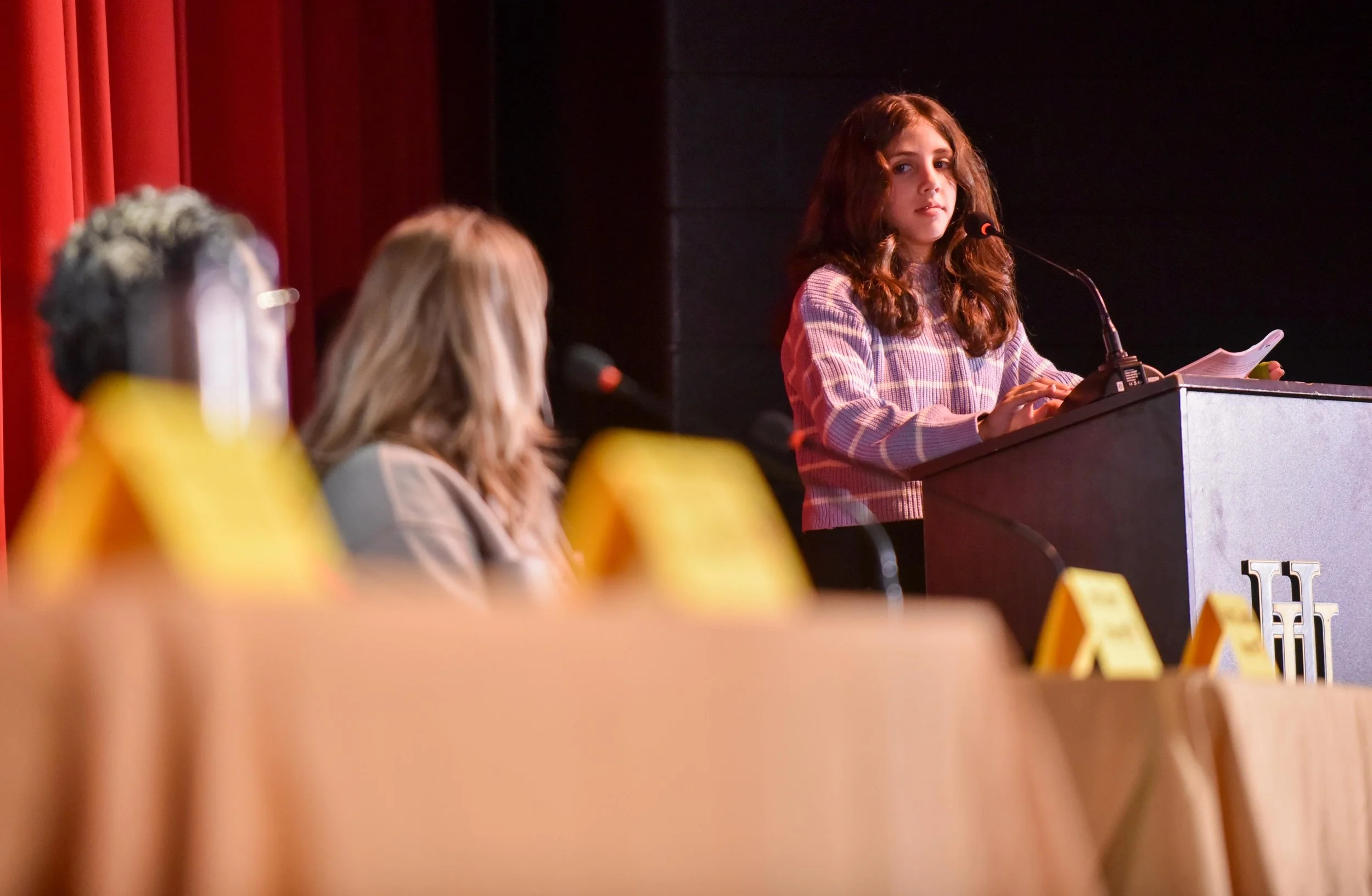
Harwood students asked the questions in the Oct. 21 candidate forum. Photo by Gordon Miller
Wearing pins that read “future voter,” seventh-grade students welcomed over 150 attendees to the Harwood Union Middle/High School auditorium last week for a forum they organized with the legislative contenders on the ballot in the school district.
Senate candidates in attendance were Democratic incumbents Ann Cummings of Montpelier, Andrew Perchlik of Marshfield, and Democrat/Progressive Anne Watson of Barre. Republican challengers Rob LaClair of Montpelier, Christopher Neddo of Barre Town, and Peter Schmeeckle of Stowe rounded out that panel. The six are vying for the three Washington District Senate seats that represent Washington County along with Stowe in Lamoille County and Orange and Braintree in Orange County.
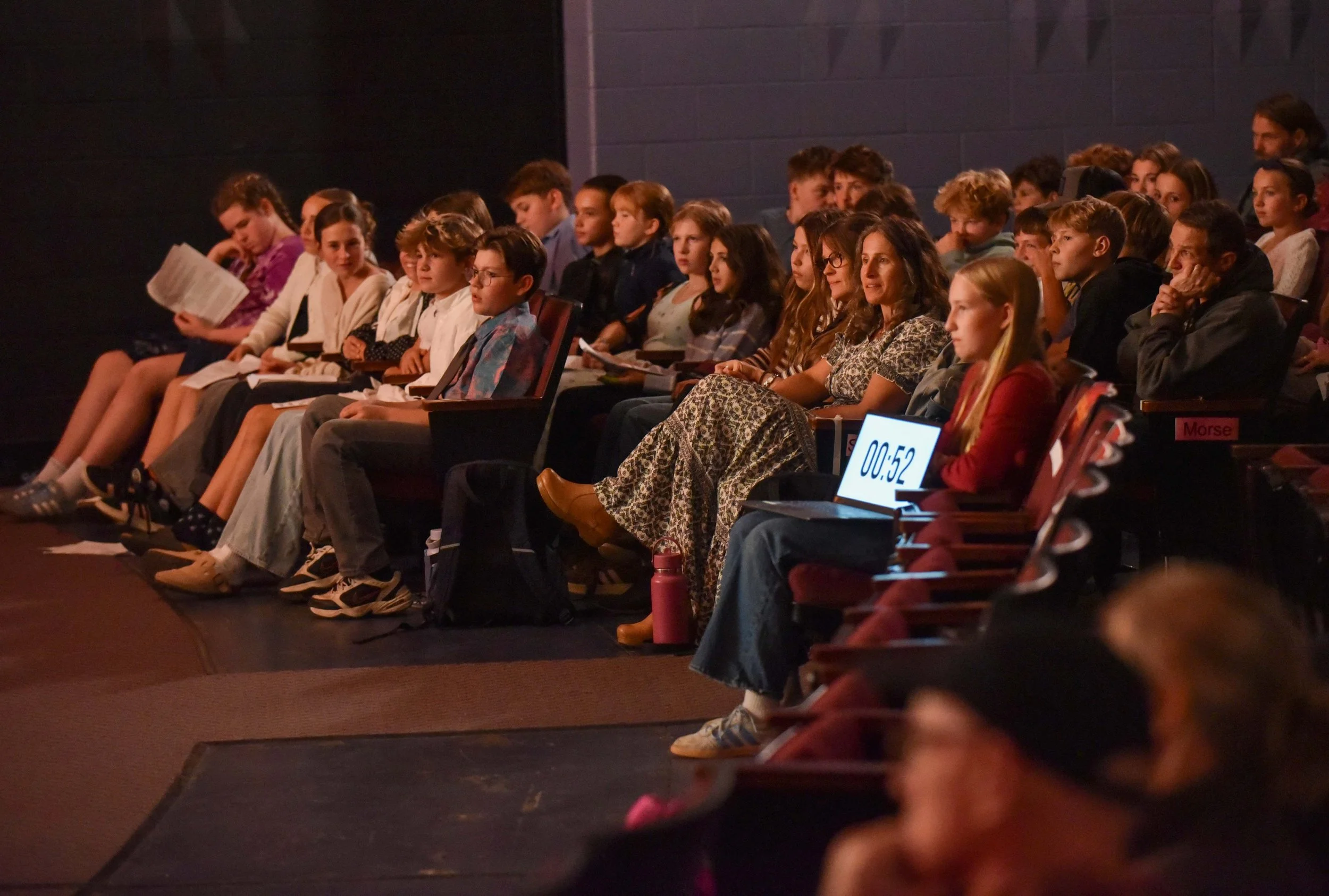
A student timekeeper sits in the front row. Photo by Gordon Miller
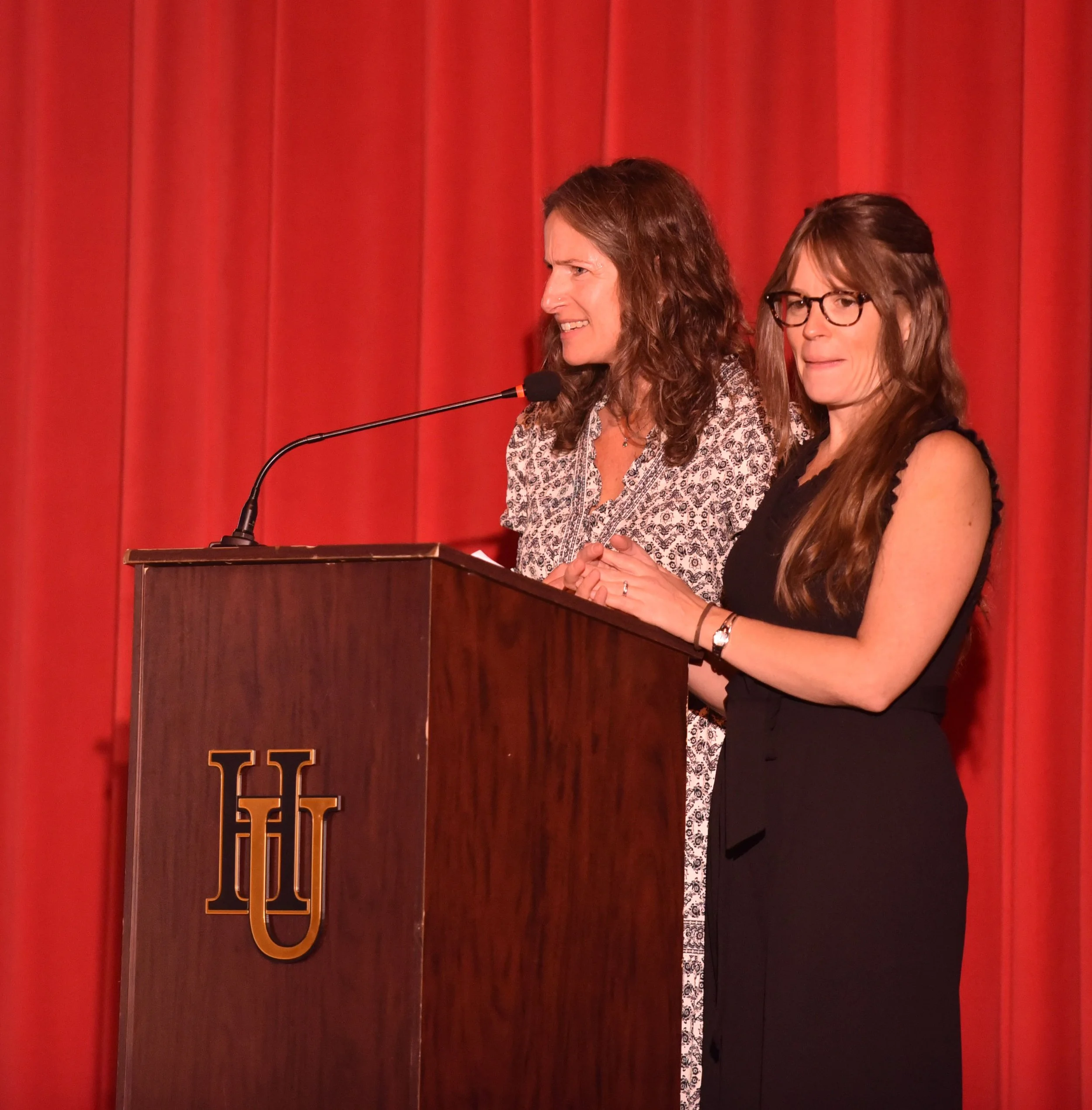
Teachers Sarah Ibson and Meredith Vaughn open the forum. Photo by Gordon Miller
All four Democratic House candidates running unopposed to represent the school district’s six towns were in attendance. Incumbents Dara Torre of Moretown and Candice White from Waitsfield are running for re-election in Washington-2 to represent Duxbury, Moretown, Fayston, Waitsfield and Warren; likewise, Waterbury incumbent Theresa Wood and first-time candidate Katarina Lisaius of Bolton are on the ballot in Washington-Chittenden to represent Waterbury, Bolton, Huntington and Buel’s Gore.
Social studies teacher Sarah Ibson and English teacher Meredith Vaughn and their students organized the event for the second time. Their classes hosted a similar forum ahead of the 2024 General Election. They hope to strengthen their students’ sense of civic responsibility, even though their students are still years away from being able to cast their vote.
“We want them to leave here with a good sense of citizenship, like how their voice matters in decisions that are made,” Ibson said. “And knowing that paying attention to what's going on in the world is really important.”
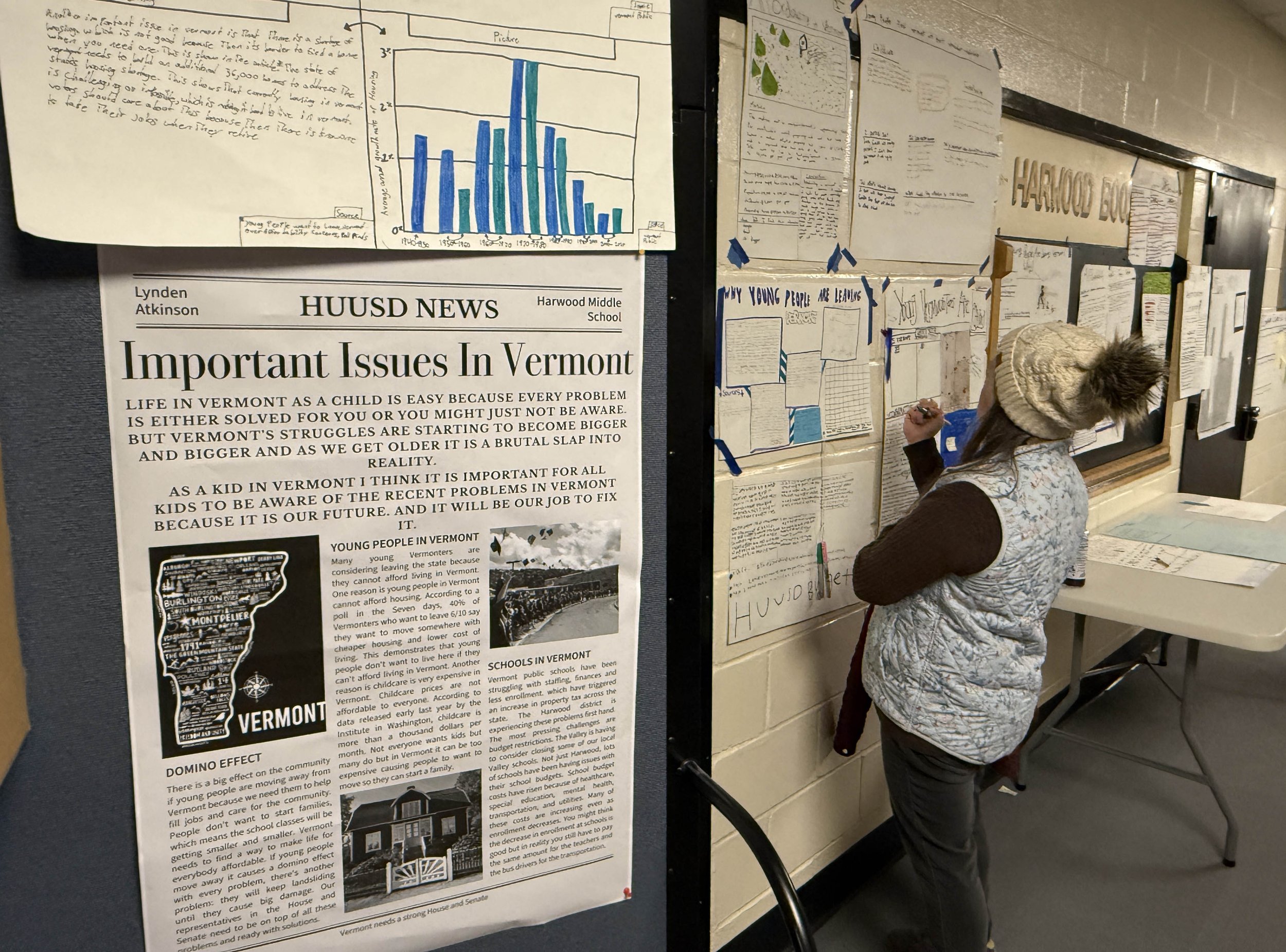
Student project posters line the corridor outside of the auditorium. Photo by Gordon Miller
Weeks before the candidates took the stage seated behind name placards with a donkey or elephant denoting their party affiliation, the seventh graders began preparing for the event.
In social studies class, students learned about how laws are passed and the structure of government. In their English classroom, they learned about local issues and part of their assignment was to interview family members and adults in their school to understand what topics are most important to voters, Vaughn said.
“The biggest one was affordability in Vermont,” Ibson noted.
Below are some highlights from the discussions.
Senate candidates first
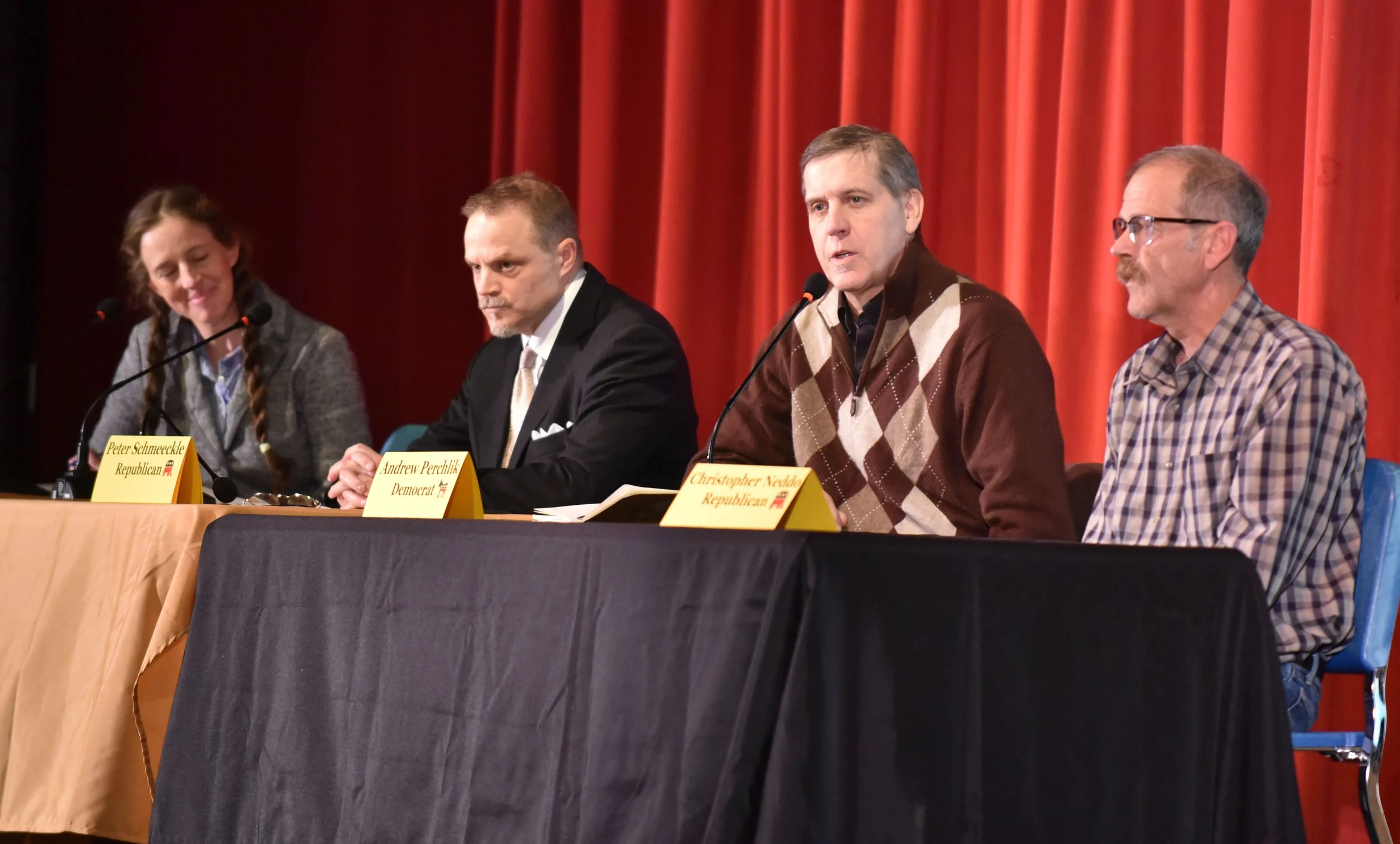
Senate candidates left to right: Incumbent Democrat/Progressive Anne Watson, Republican challenger Peter Schmeeckle, incumbent Andrew Perchlik, Republican Christopher Neddo. Photo by Gordon Miller
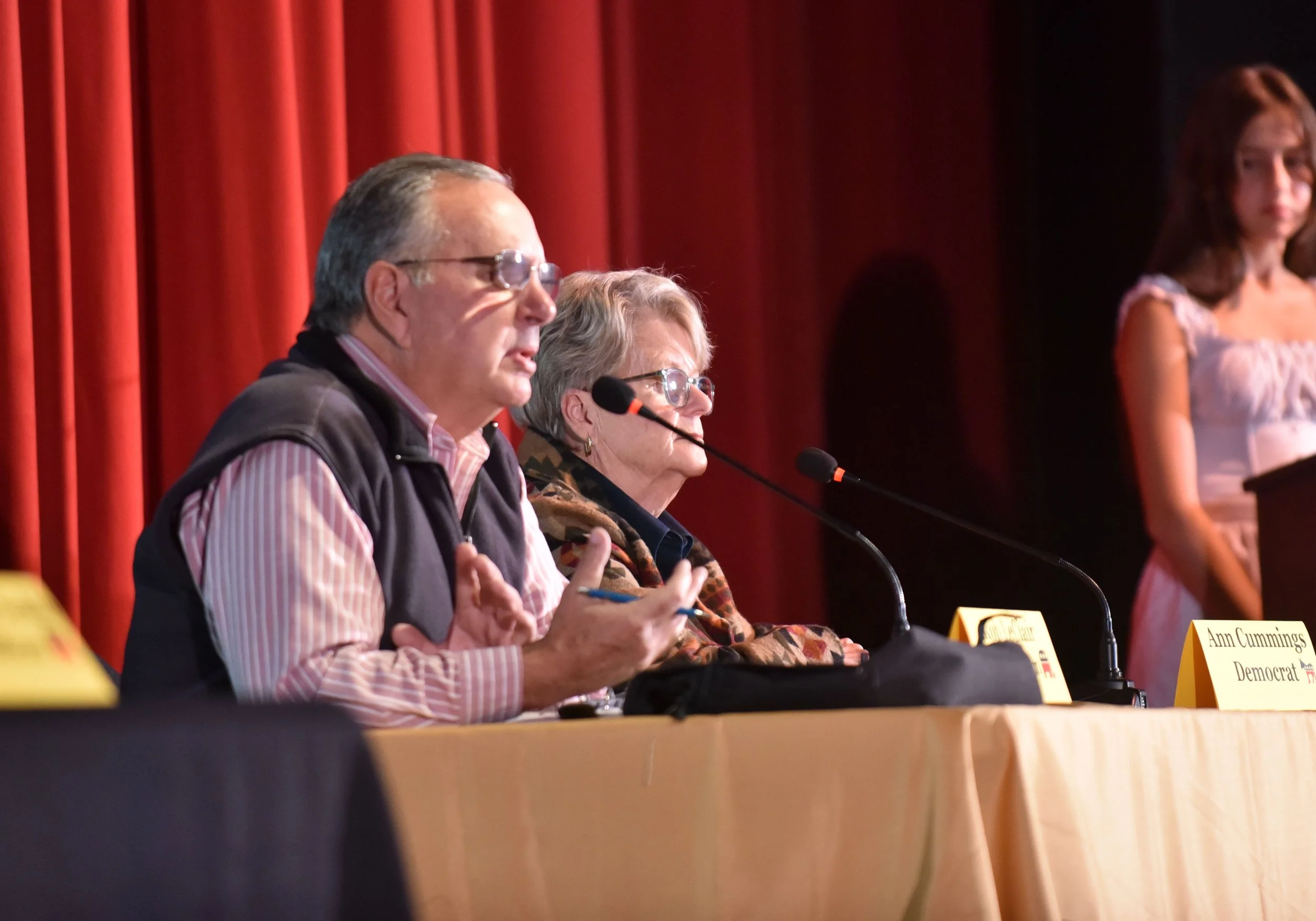
Candidate Rob LaClair answers a question. At his left is Sen. Ann Cummings. Photo by Gordon Miller
Before an audience of students, school staff, parents and community members, the forum began with the six Senate candidates. Student moderators asked them four questions and each candidate had one minute to respond. As students walked to the stage to ask questions, cheers of support erupted from their classmates. The questions addressed issues around affordability, keeping young Vermonters in the state and what makes a good candidate.
The candidates began by remarking on the event itself.
“This is by far the best-attended, best-organized forum I’ve been to all year, probably ever,” LaClair said.
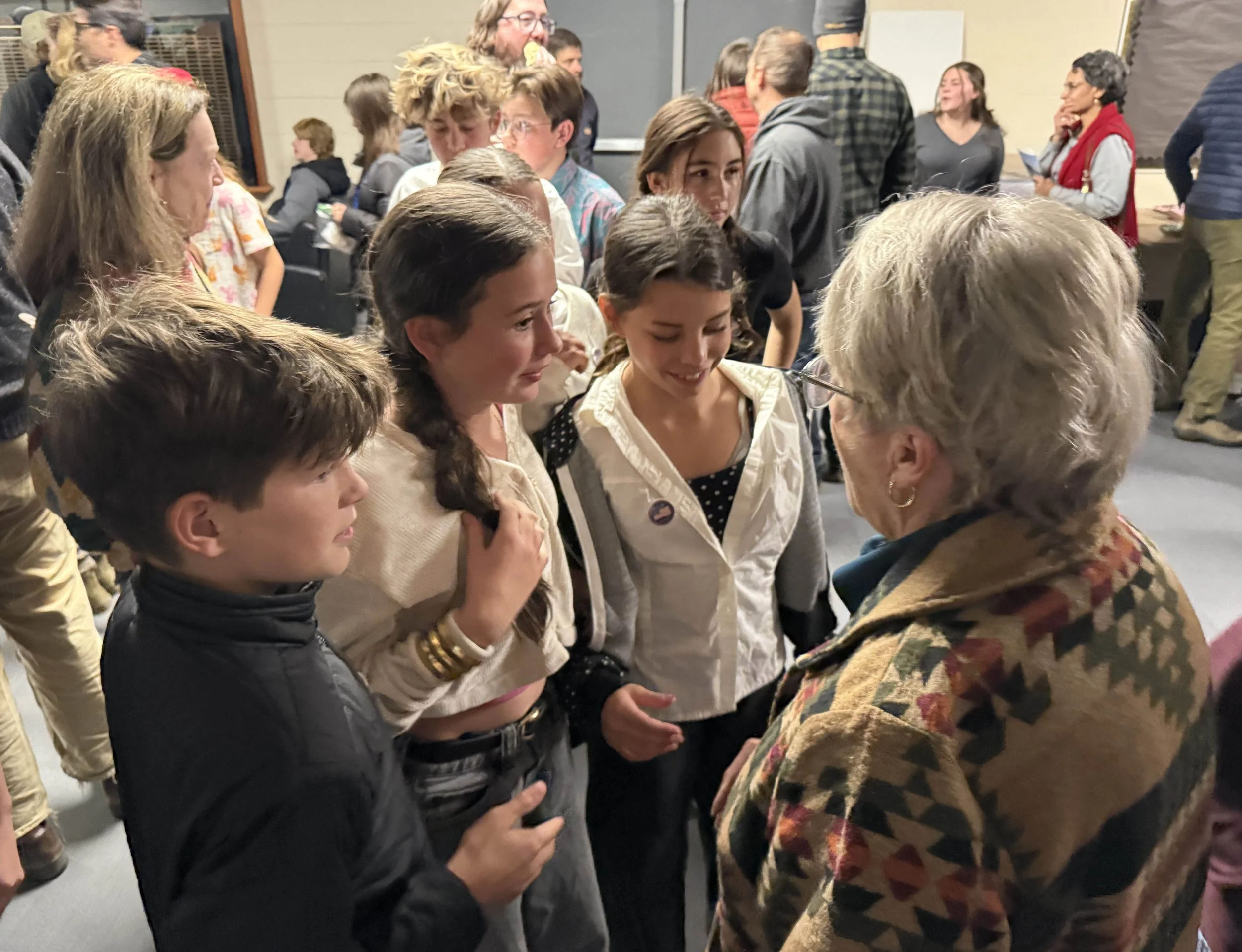
During intermission, students chat with the candidates such as Sen. Ann Cummings at right. Photo by Gordon Miller
In response to a question asking what makes a good candidate, all the contenders agreed that a senator must have integrity, a willingness to listen to the needs of Vermonters, and involvement in the community.
LaClair said he feels as if there is a lot of work that needs to be done to ensure that the average Vermonter is well represented in Montpelier. “Our state, we’re just sort of surviving,” he said. “We got to get back to where we can thrive.”
Watson said she believes candidates are looking for someone willing to work across the aisle.
Addressing affordability
Candidates agreed that housing affordability in Vermont is a pressing issue. Most suggested permit reform as one solution to increase housing stock.
Cummings pointed out that she is a former real estate agent. She said one obstacle to building more housing is the high cost of materials and labor, which is a national trend that can’t be fully addressed at the state level.
Students also asked candidates how they would address young people’s concerns about staying in Vermont after graduation. They cited a story from Seven Days that reported 60% of Vermont residents between the ages of 18 and 34 will “likely” move away from the state in the next five years.
Republicans Neddo and LaClair highlighted the need for more job opportunities in Vermont. They both said building out more industry could keep young people in state.
Schmeeckle encouraged 18-to-25-year-olds who can’t find a job or career in Vermont to consider joining the military and serving their country.
Watson suggested a wealth tax to help increase affordability for young people. “Wealth inequality is one of the biggest issues of our time, and one of the ways that we can make Vermont more affordable is by asking Vermont’s wealthiest residents to pay a little bit more,” she said.
Cummings agreed with Watson: “We need to work on our economy,” she said. “We need to make sure that our education stays top quality. We need to work on getting those property taxes down.”
Meanwhile, Perchlik said that spending time away from Vermont can give young people valuable perspectives. “A lot of kids everywhere go explore the world, and you should go out and explore the world and come back to Vermont,” he said. “It makes Vermont a better place if people have gone out.”
House candidates weigh in
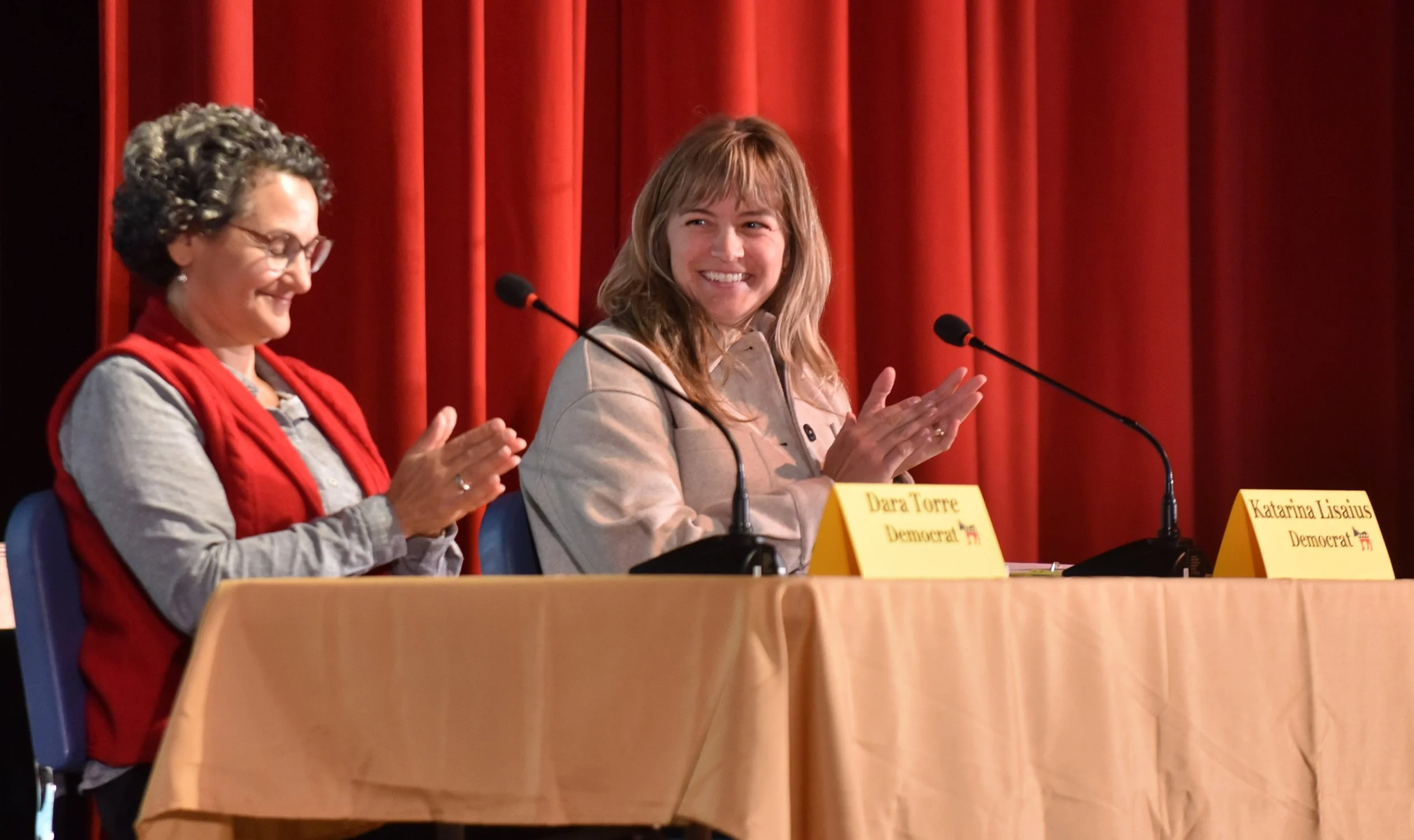
Rep. Dara Torre of Moretown (left) is running for re-election and Katarina Lisaius (right) of Bolton is a first-time candidate for the Vermont House. Photo by Gordon Miller
The four House candidates also fielded four questions each. Students continued asking about housing affordability, young people leaving Vermont, and the future of the state.
Lisaius said these issues are close to home as she shared that she’s a Harwood graduate who stayed in Vermont for college and has never moved elsewhere.
“I want to make sure that opportunity is available for other young Vermonters,” Lisaius said, adding that she wants to focus on development and opportunities for young people in rural parts of the state.
To encourage young people to stay in the state and live on their own, Torre said there needs to be a strong relationship between landlords and tenants. As for the future of Vermont, Torre sees a need for moderation: “We have to balance the needs of today with the longer-term vision.”
White said she sees a state with more clean energy in the future to save money and protect the environment.
Wood, who chairs the House Human Services Committee, drew attention to the homelessness crisis in the state. “We have hundreds of children who are sleeping outside, sleeping in shelters, sleeping in family cars. We are better than that and we are not doing the right things by those folks,” she said.
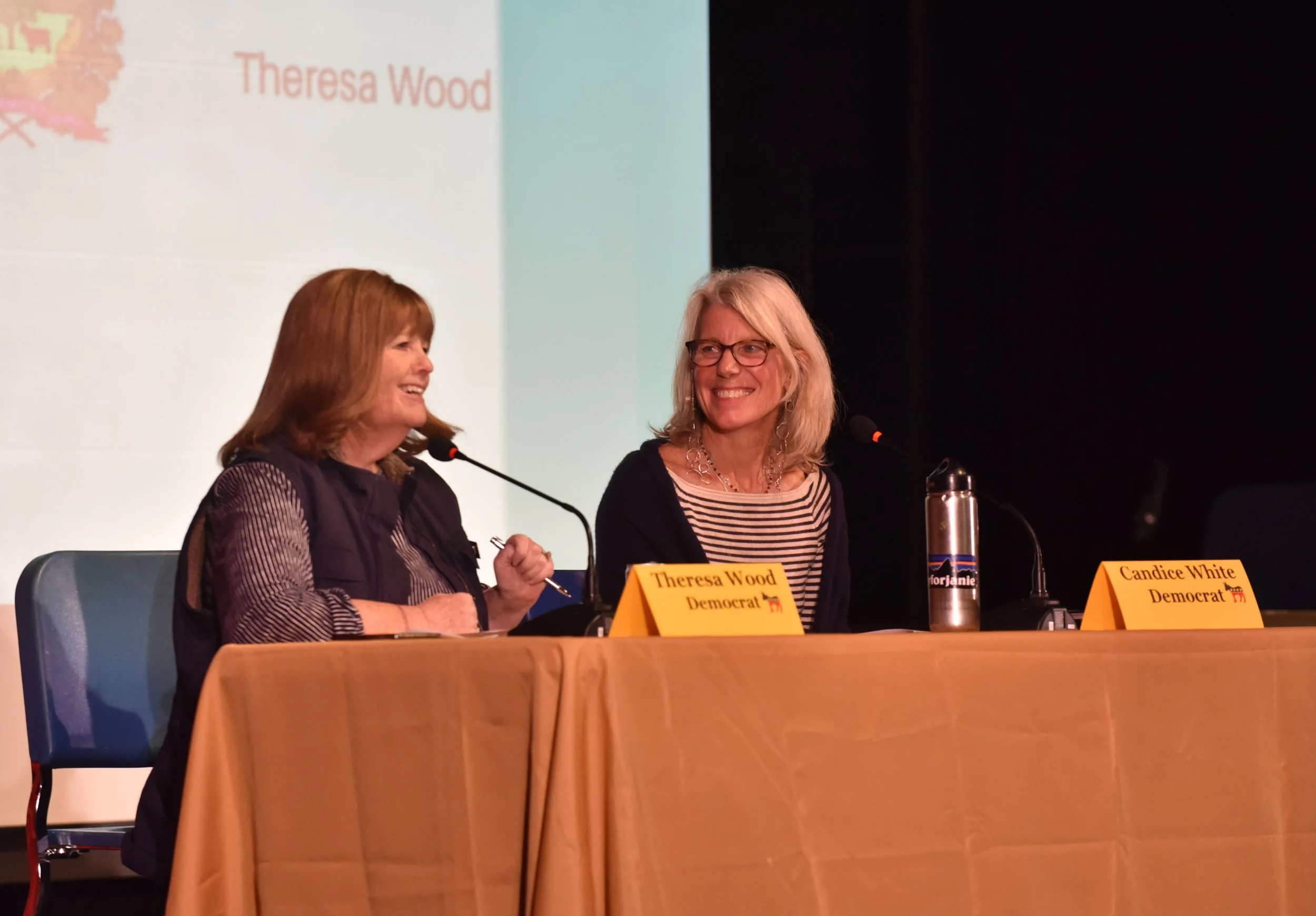
Democratic state Reps. Theresa Wood of Waterbury and Candice White of Waitsfield are running for re-election. Photo by Gordon Miller
Education reform
Students asked the House candidates what they think the state should do to address school funding, and ongoing efforts to consolidate school districts around Vermont as well as measures in the Harwood district.
Wood pointed out that she previously served on Waterbury’s local school board for 12 years prior to the creation of the current unified district. “We know that there are a lot of pressures on schools to do a lot more in terms of social services, and those are the kinds of things that we have to pay attention to and find other ways to fund, not just on the backs of property tax and the general education budget,” Wood said.
White noted that the legislature in this year’s session moved away from mandatory to voluntary school district mergers in regard to the reform effort.
“There is a general consensus that changes need to happen, that they’re going to be difficult in the short term, but in the long term they will provide really more opportunities for students,” White said.
Torre suggested that the push for change is coming too quickly. “This is a very ambitious, very complicated, reform effort,” Torre said. “We need to proceed carefully. We would hate to see a school like Harwood go through painful cuts that really set our kids back because we’re forcing things to happen fast and without all the information we need.”
Lisaius said she is focused on ensuring that the representatives are thoughtful about this process and who is involved, paying special attention to who may be left out and how they can participate.
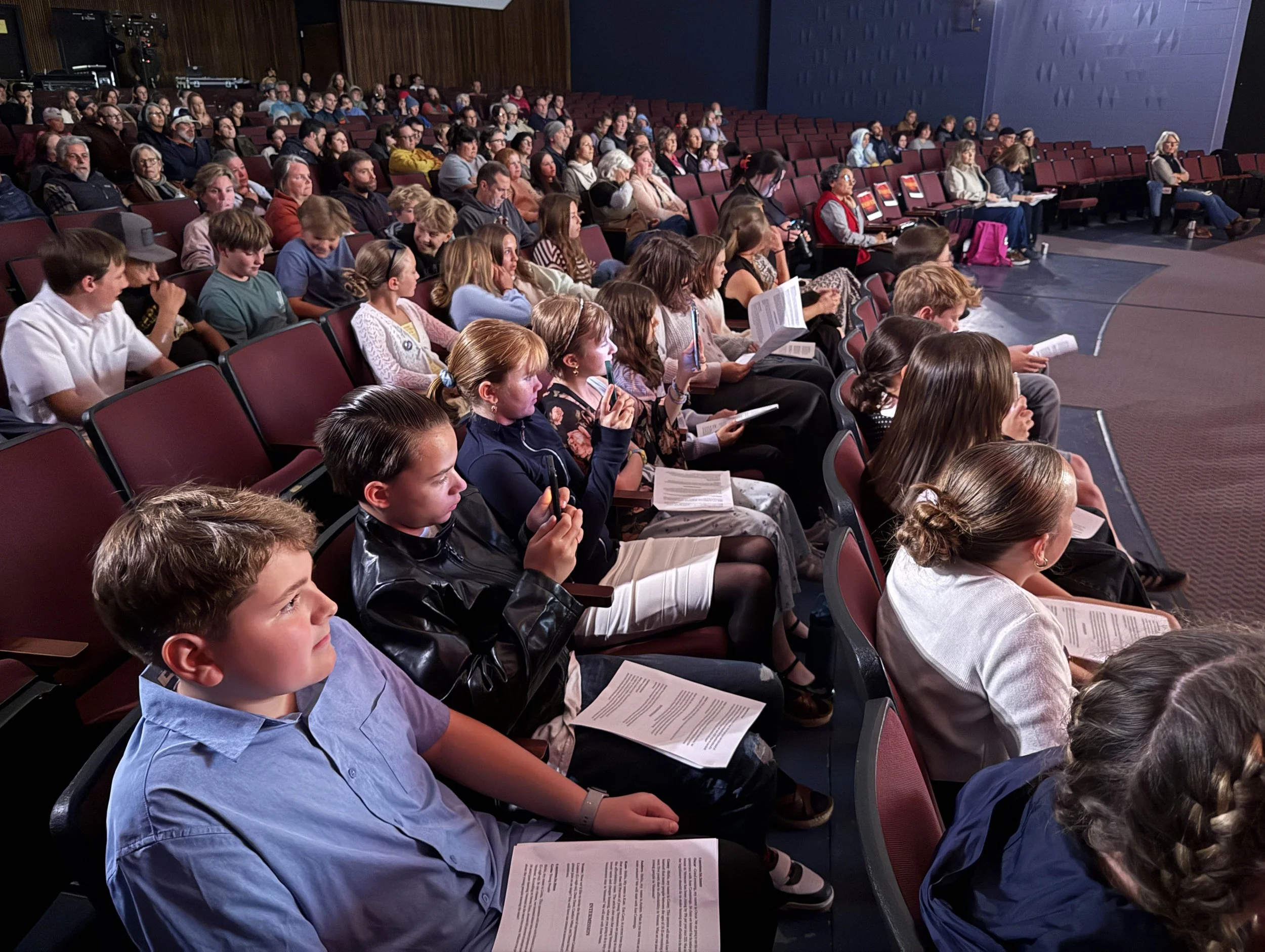
Parents, teachers and school staff, and community members sit in attendance. Photo by Gordon Miller
Student follow-up
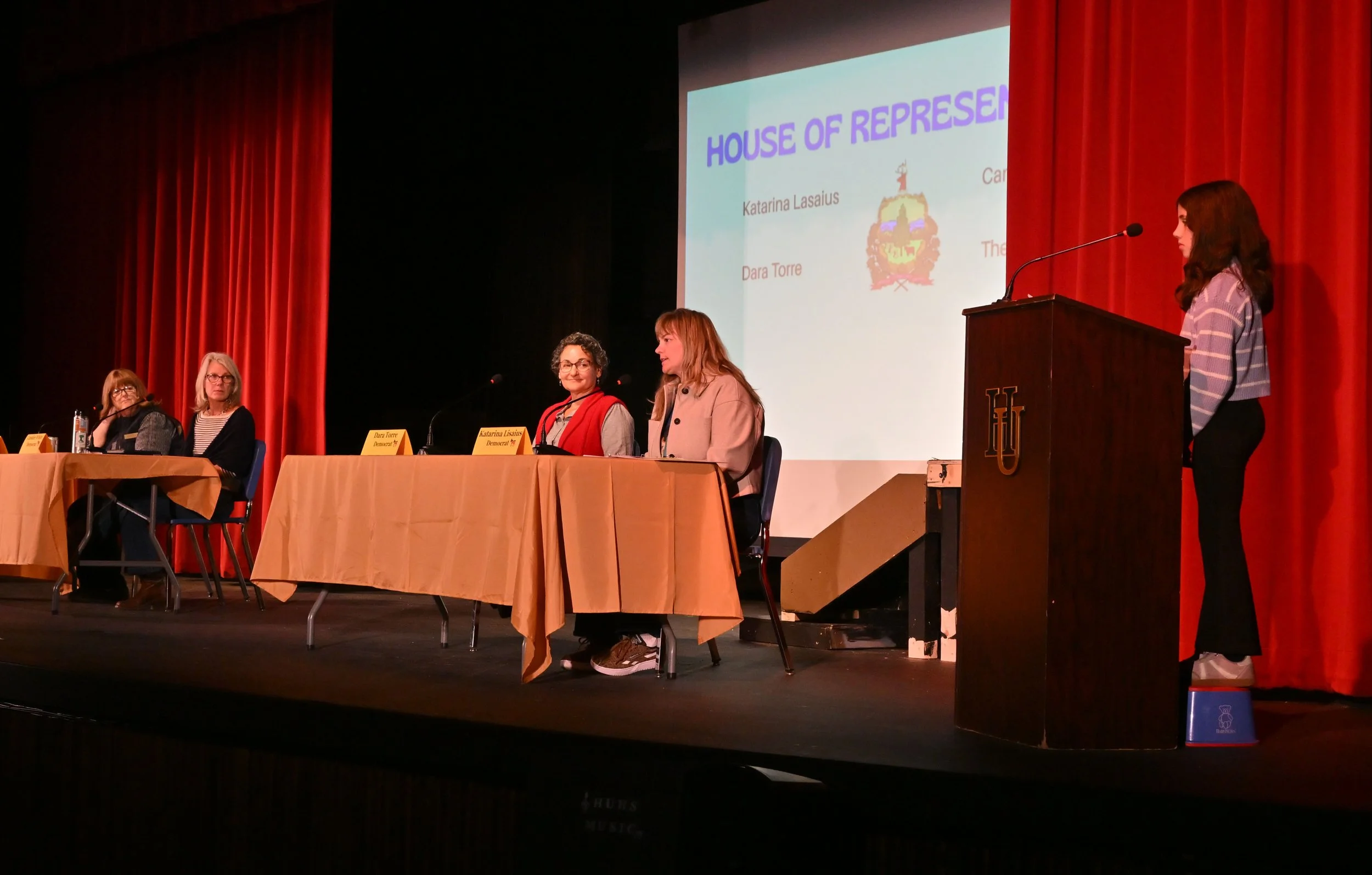
Students running the forum still have several years to go before they can vote. Photo by Gordon Miller
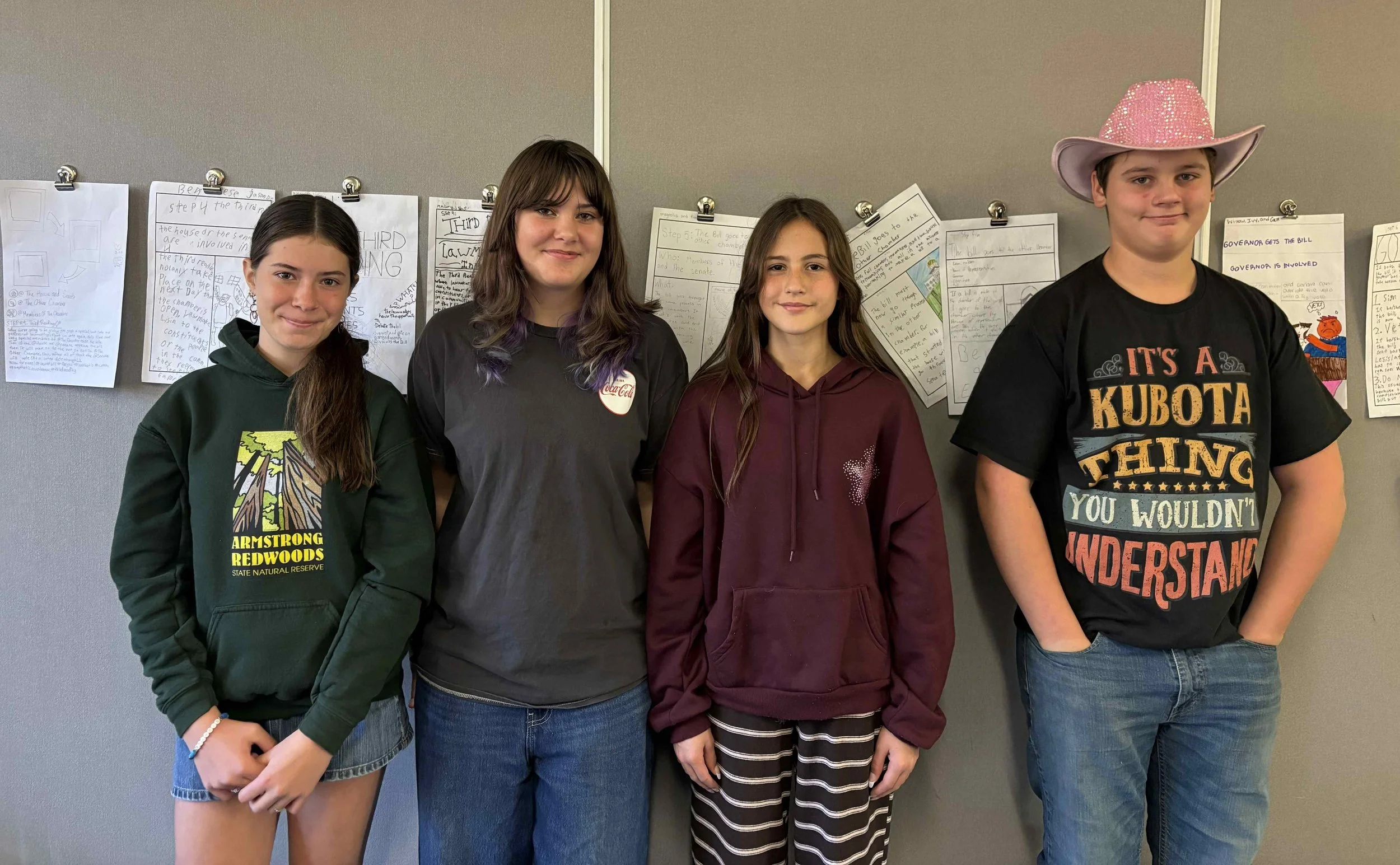
7th grade students who helped plan and run the forum. Left to right: Sylvia Lehnhoff, Greta Ciotti-Young, Ginny Reinhold and Jason Diego. Photo by Lindsay Foxwell
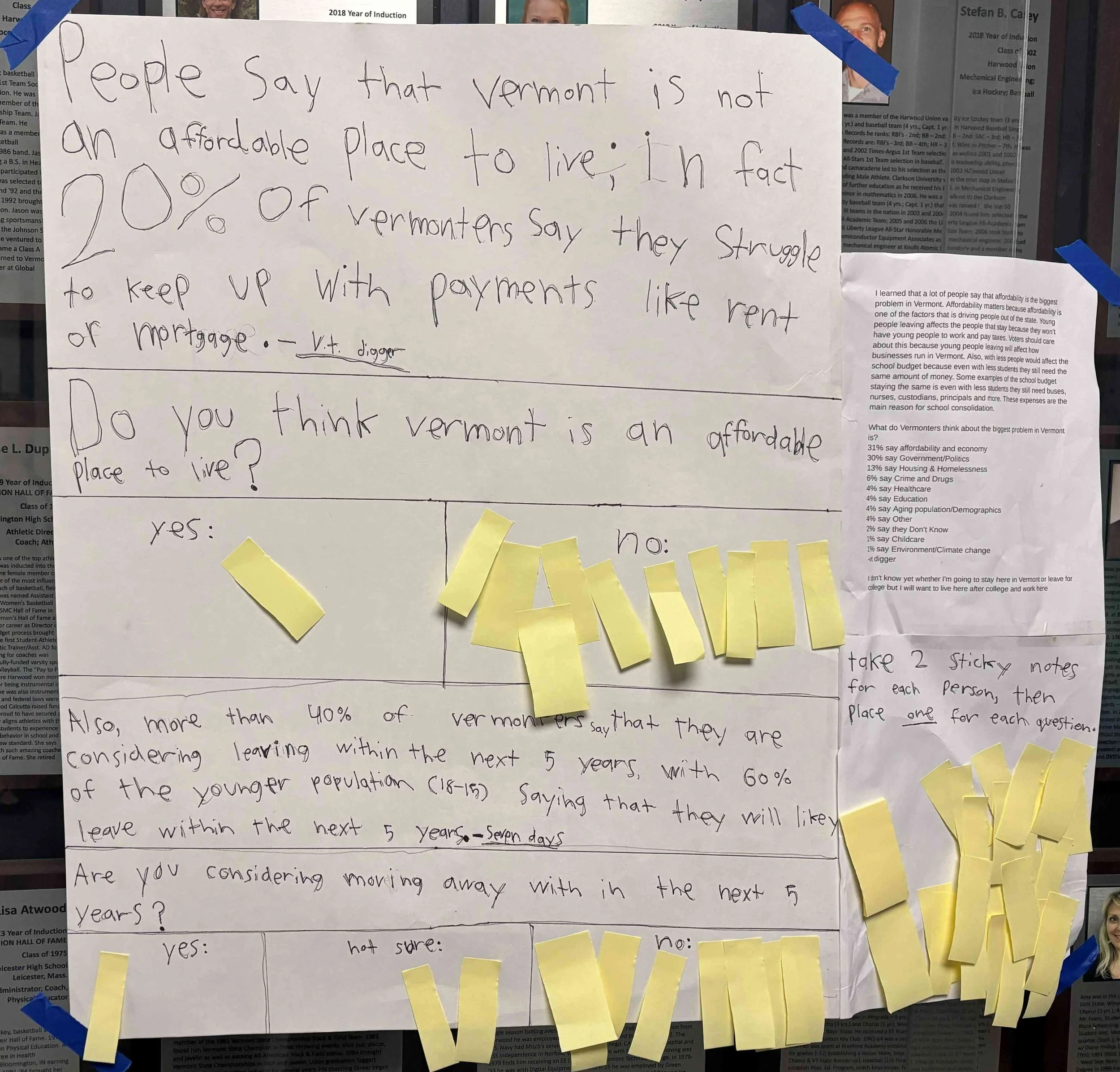
An interactive poster by a 7th grader asks readers to leave answers on sticky notes. Photo by Lindsay Foxwell
The event wrapped up at 7:30 p.m. but not before attendees were asked to offer feedback. As audience members exited the auditorium, they were encouraged to fill out an online exit poll conducted by the math club, which was also holding a bake sale.
The poll asked for demographic information, political affiliation, issues that impact them most and candidate choices in the Senate and House races. It also asked participants if they would vote for a 14-year-old for any Vermont office.
Students plan to analyze the data from the poll and create graphs to illustrate their findings. The results will show “a picture of what our valley residents care about,” seventh-grade math teacher Andrea Knepper said.
Students who organized the event also put together topical posters that were displayed in the lobby of the auditorium.
“I wrote about how every vote counts. Even if one person votes, that still really matters,” student Sylvia Lehnhoff said.
Student Ginny Reinhold said she learned about the importance of attending candidate forums. “If they don't know who they’re voting for and just vote for someone off of what label they have like Democrat, Republican, or third party, then you don't really know who you’re voting for,” she said. “They can be in the same party as you but not have the same morals as you.”
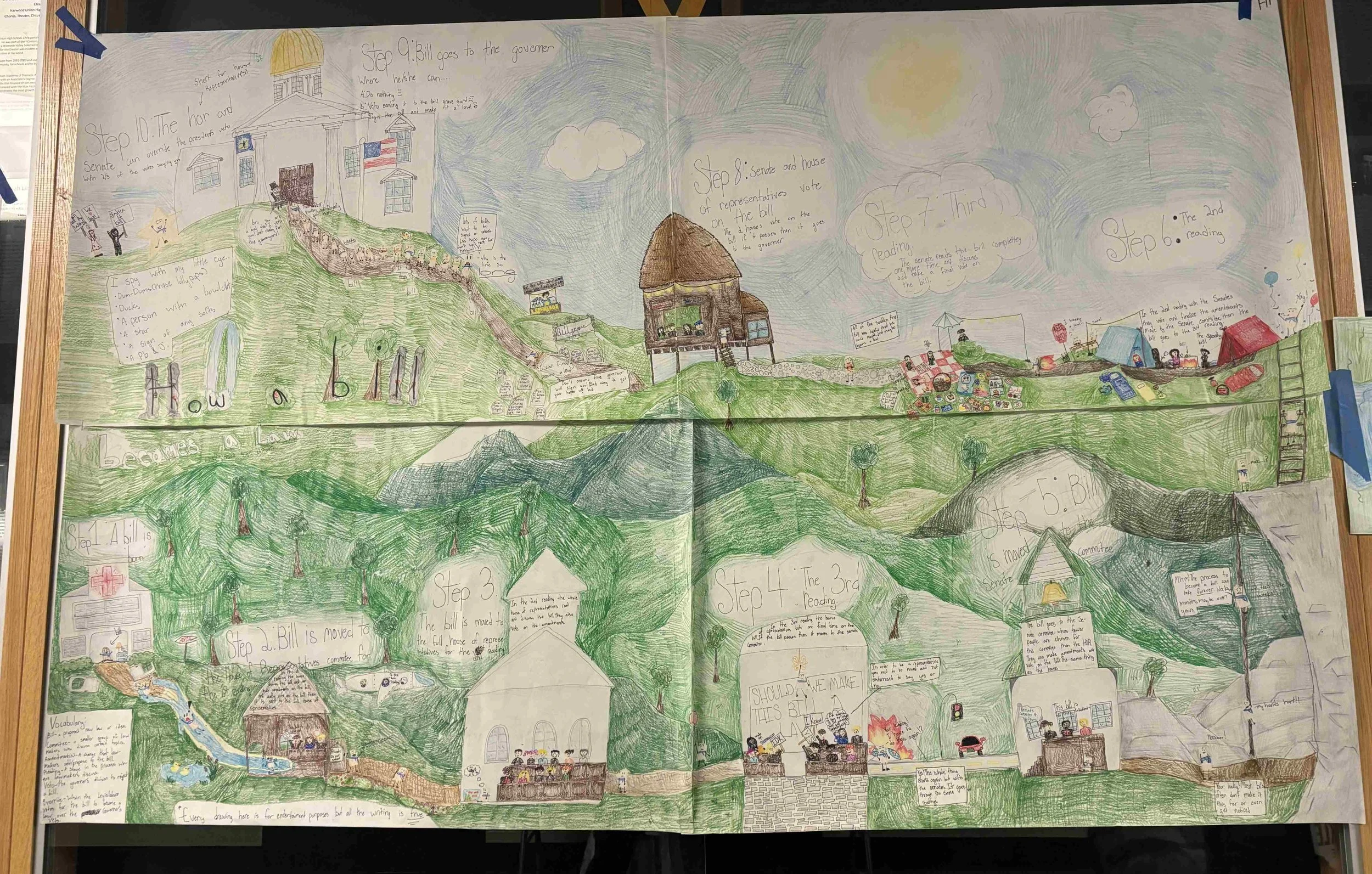
A student poster depicts how a bill becomes a law. Photo by Lindsay Foxwell
The event was live-streamed and recorded by Mad River Valley TV.
Community News Service is a University of Vermont journalism internship reporting for Vermont news outlets, including the Waterbury Roundabout.